
Skip to content

TEMA Medtech

Medical devices must prove performance and durability under conditions that are hard to observe and harder to repeat. 

With TEMA Medtech, you turn high-speed video and medical images into objective, quantified measurement data — from in vivo and in vitro studies to material testing and device validation. 

Motion analysis software for medtech testing

Device motion is too fast and too small to judge by eye. Manual frame-by-frame analysis is slow and varies between operators. 

TEMA Medtech automatically tracks devices in your high-speed footage and medical images, turning movement into precise 2D, 3D and 6D data — the same way on every test. 

Why medtech teams choose TEMA

Your image data stays on your network

On-premise and offline deployment options, so patient images and test data never have to leave your environment. 

Backed by decades of measurement experience

 40+ years of in-house development of motion analysis, with [accuracy figure, e.g. sub-pixel tracking accuracy of X px]. 

Fits your existing lab setup

Works with high-speed camera footage, DICOM images and all commonly used video and image formats; no proprietary hardware lock-in. 

Traditional workflow

TEMA Medtech

❌Manual frame-by-frame measurement of device motion

✅Automated tracking of devices and biological structures

❌Subjective visual review of deployment and leaflet behavior

✅Quantified 2D, 3D and 6D motion, deformation and strain data

❌Inconsistent results between operators and test rigs

✅Repeatable, objective workflows on every test

❌Weak visual evidence for design decisions and submissions

✅Faster design iteration, failure investigation and validation

Where TEMA fits into your test program

Delivery, Deployment & Positioning

Track cardiovascular devices through complex anatomical pathways and under pulsatile conditions to identify risks such as migration or malpositioning.

In Vitro & Hydrodynamic Testing

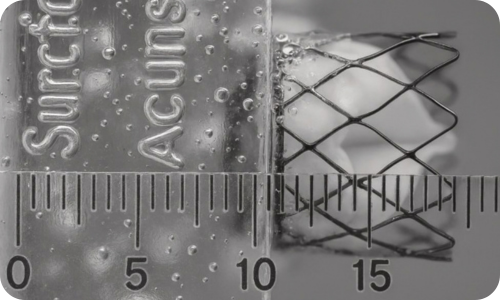
Visualize leaflet motion, stent expansion and deployment dynamics across a range of simulated flow conditions.

In Vivo Device Tracking

Track and analyze medical devices and biological structures within living systems, including directly from DICOM images.

Material Characterization

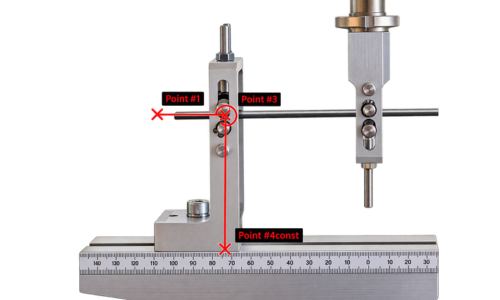
Use 2D and 3D Digital Image Correlation to analyze deformation, strain distribution and failure mechanisms under various loading conditions.

Fatigue & Accelerated Durability

Measure cyclic motion, deformation and failure progression under simulated physiological conditions to identify failure modes early.

Soft Tissue & Biomechanics

Measure strain and elastic properties of tendons and other biological tissue under tensile load with DIC — for orthopaedic and biomechanics research.

TEMA Software in numbers

130+
customers
50+
countries
40+
years of experience

Research spotlight: soft tissue deformation

Untitled design (41)

Two tissue layers, two different behaviours.

Researchers at the University of Pretoria used TEMA's Digital Image Correlation to measure the elastic properties of rotator cuff tissue, and found that tendinous and capsular layers respond differently under load. 
About the study

  • Published: European Journal of Orthopaedic Surgery & Traumatology, 2025
  • Research team: University of Pretoria and partner institutions
  • Method: tensile testing of human shoulder tissue, recorded with DIC cameras
  • Key finding: tendinous layers showed higher average tangent elastic moduli than capsular layers

How the study was conducted

Key results

Tendinous and capsular layers were dissected from human shoulder tissue.

Each strip, marked with a speckle pattern, was tensile tested.

DIC cameras recorded the test, and TEMA tracked the speckle displacement.

Strain and elastic properties were calculated for each layer.

Measurable differences in stiffness between tissue layers

Strain variation captured throughout the test

Evidence for treating each layer separately in surgical repair

Relevance for orthopaedics, biomechanics and regenerative medicine

Choose your TEMA Medtech configuration

Each configuration is built around specific test scenarios — from in vivo device tracking to material and soft tissue characterization. 

29

In vivo

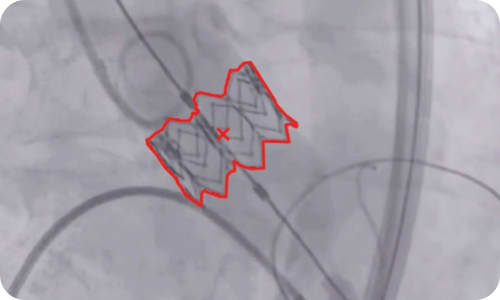
Best for: tracking devices in fluoroscopy and other medical images (2D).

Motion analysis for in vivo device testing and research — tracking of medical devices and biological structures within living systems. 
  • Professional 2D Analysis Software
  • Skewed Motion Plane
  • Full Tracker suite
  • Adaptive Outline Tracker
  • DICOM image support
  • Lens Calibration
  • Advanced Viewer
31

In vitro

Best for: bench and hydrodynamic testing with multi-camera 3D and 6D analysis. 

Sophisticated measurement for laboratory testing of medical devices and biological samples, with 2D, 3D and 6D capabilities for quality control, research validation and product development. 
  • Professional 2D, 3D and 6D Analysis Software
  • Full Tracker suite
  • Adaptive Outline Tracker
  • Multiple Camera 3D analysis
  • Single Camera Rigid body analysis
  • Lens Calibration
  • Advanced Viewer
30

Material testing

Best for: full-field strain and deformation with DIC — materials and soft tissue. 

Evaluate material properties, mechanical behavior and structural performance with advanced 2D and 3D Digital Image Correlation (DIC). 

  • Professional 2D and 3D Analysis Software
  • Full Tracker suite
  • Accurate DIC Surface tracking
  • Multiple Camera 3D analysis
  • Adaptive Outline Tracker
  • Lens Calibration
  • Advanced Viewer

Ready to turn test footage into evidence you can trust?

See how TEMA helps medical device engineers and researchers extract measurable motion data from in vivo, in vitro, material and soft tissue testing. 

Frequently asked questions

What is TEMA Medtech?

TEMA Medtech is motion analysis and measurement software for the medical technology industry. It turns high-speed video and medical images into quantified motion, deformation and strain data for in vivo and in vitro testing, material characterization and device performance validation.

What test scenarios does TEMA Medtech support?

Delivery, deployment, positioning and retraction; in vitro and hydrodynamic testing; in vivo device tracking; material and soft tissue testing with DIC; and fatigue and accelerated durability testing.

Can TEMA analyze fluoroscopy and other medical images?

Yes. The In vivo configuration includes DICOM image support, so devices and biological structures can be tracked directly in medical imaging data.

How accurate are TEMA measurements?

In synthetic test data covering image noise, compression and oblique viewing angles, trackers located the target centre with a mean error of about 0.1 px across all tested detection radii, with 99% of tracked frames within 0.42 px. At the best chosen tracker radius, mean error was 0.05–0.13 px depending on the condition, with a per-axis precision of about 0.06 px under image noise.


Errors were essentially unbiased (systematic offset below 0.05 px), normally distributed and independent of target speed, so the tracker’s measurement noise is both small and predictable.

Why should I use TEMA for my test reports?

 TEMA gives you repeatable, quantified measurement data and visual evidence of device performance to include in your test reports.

Instead of relying on subjective visual inspection, you can track and measure motion directly from your test footage, such as position, velocity, acceleration and angles, with consistent results every time. The results can be exported as graphs, data tables and annotated video, so your reports show both the numbers and the visual proof behind them. 

Which TEMA Medtech configuration is right for our lab?

In vivo suits device tracking in living systems and medical images; In vitro suits bench and hydrodynamic testing with 2D, 3D and 6D analysis; Material testing adds DIC surface tracking for strain and deformation. Our team can help you choose.

What cameras and hardware do we need — do we have to buy proprietary equipment?

No. TEMA supports all commonly used video and image formats and a growing range of vendor-specific codecs, so you can use your existing high-speed cameras.

How much does TEMA Medtech cost?

 TEMA Medtech is available in several configurations, priced to match your test program's needs. Contact us for a quote based on your configuration. 

See TEMA Medtech on your own test footage

Book a demo with our team and bring a recording from your lab: we'll show you what TEMA can measure.